Explore the Heritage and Legacy of the Hursley and Hambledon Hunts
Delve into the origins, traditions, and cultural significance of the Hursley and Hambledon Hunts, revealing the enduring values and stories that shape their place within the hunting community.
Discover the Legacy of Hunts
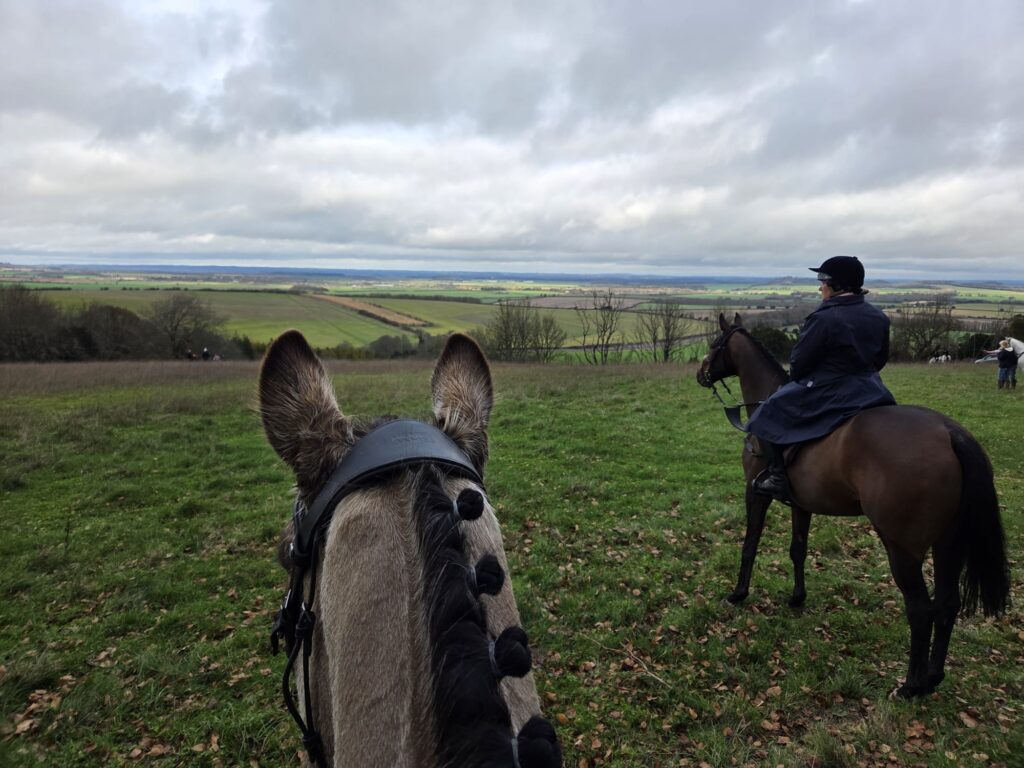
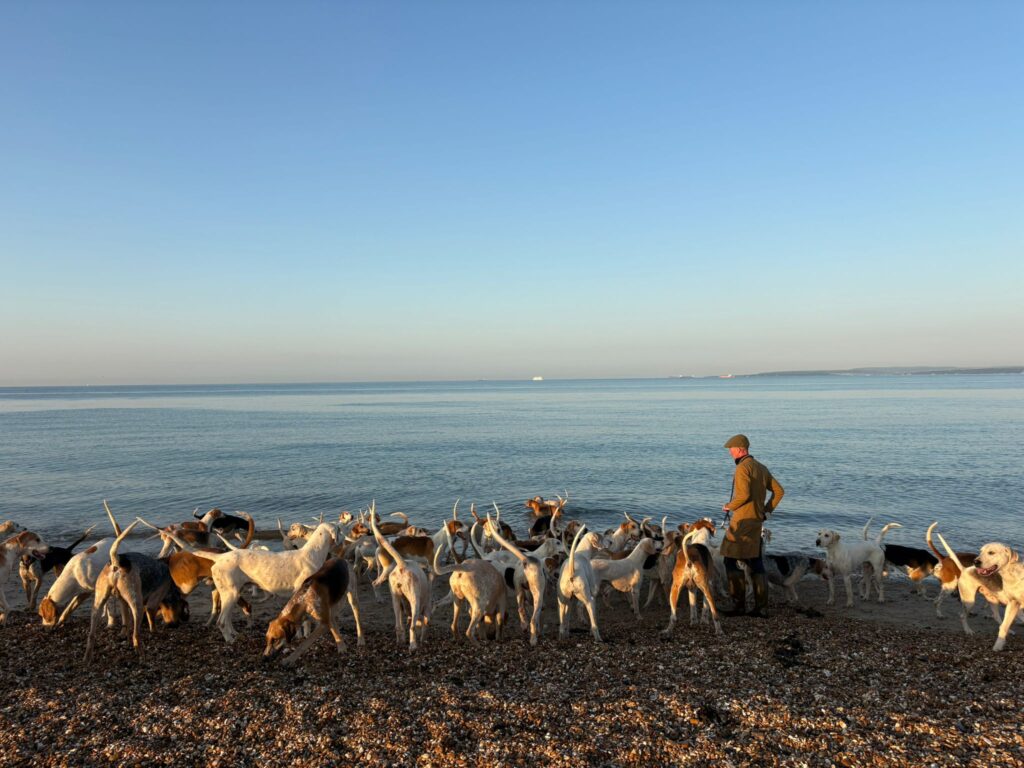
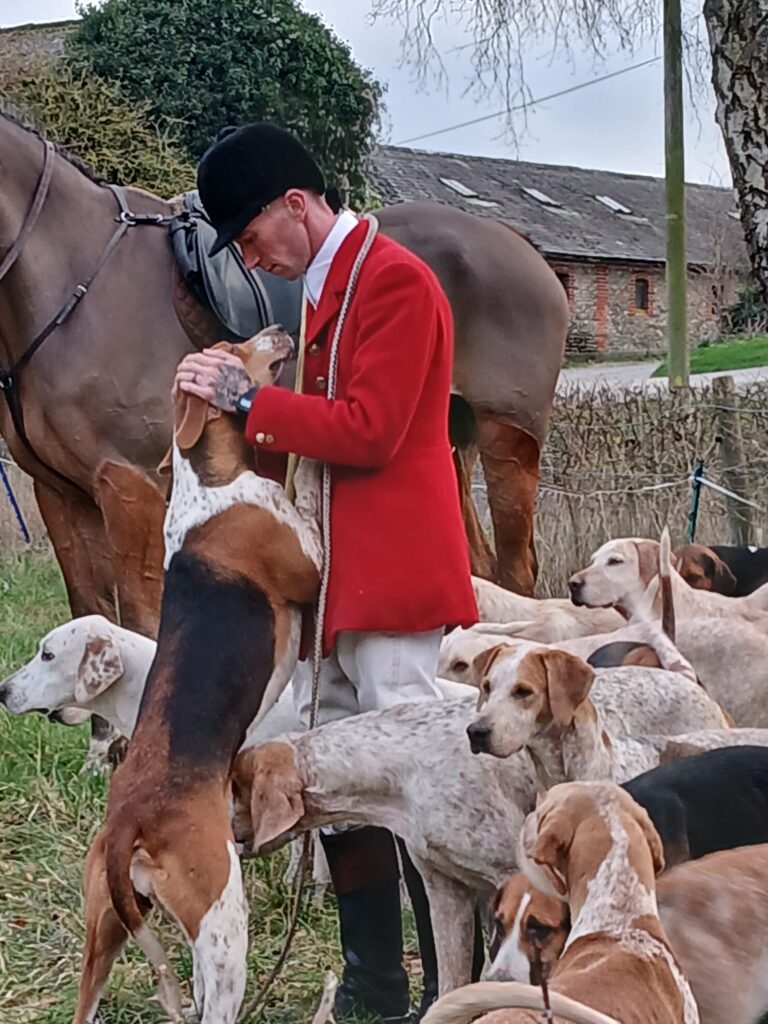
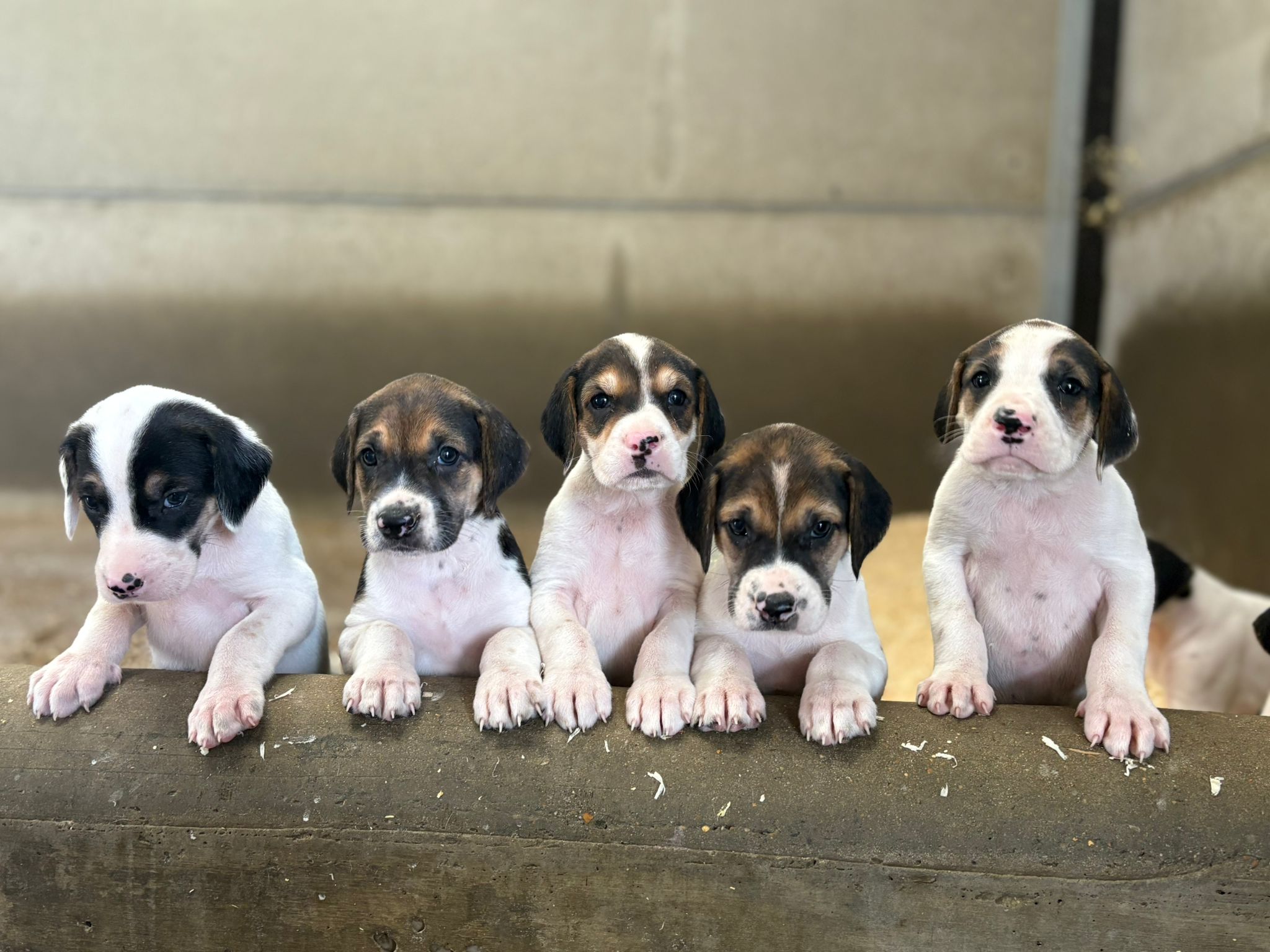
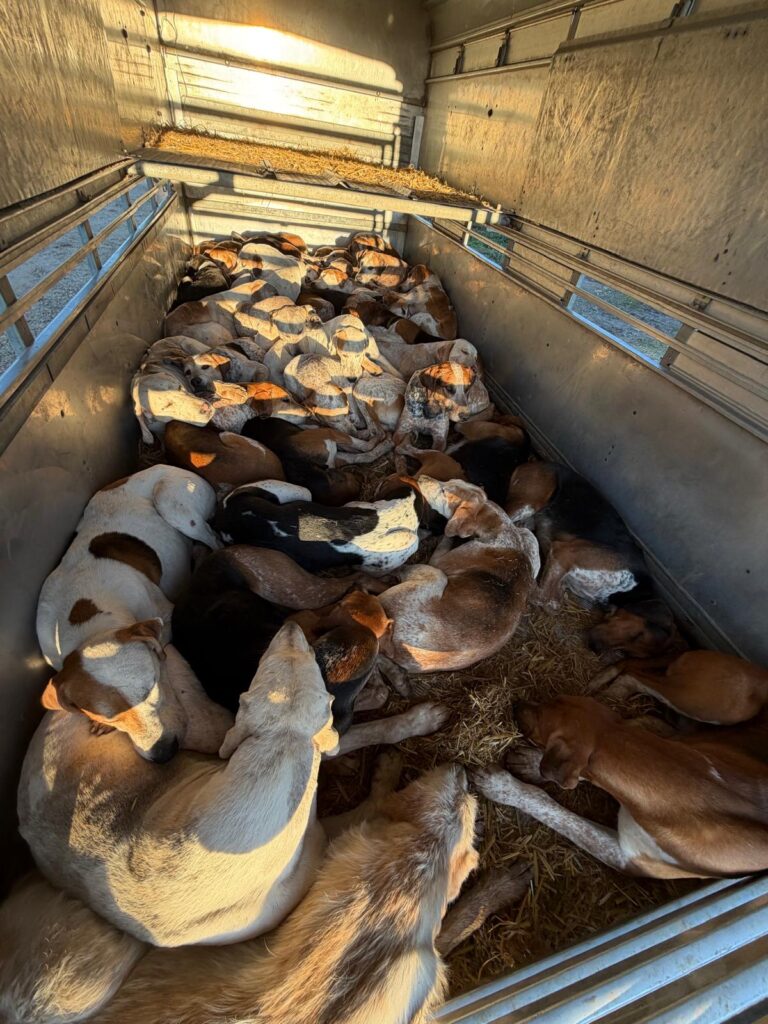
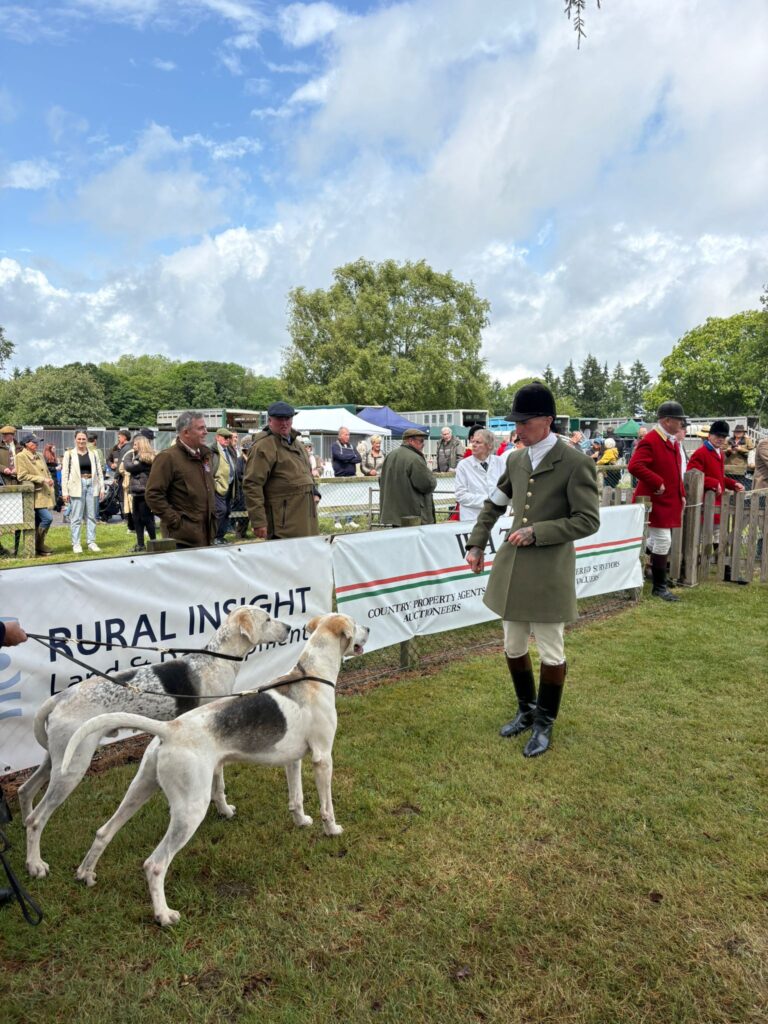
Dive into a carefully selected array of photographs capturing the rich traditions and spirit of the Hursley and Hambledon Hunts.
Uncover the Rich Hunting Traditions
Dive into the legacy of the Hursley and Hambledon hunts, exploring their origins and enduring impact.

Hursley Hunt Origins
On the death of that grand old sportsman Mr Henry Villebois, Master of the HH in 1836, the Rev Sir John Barker Mill obtained a loan of the country west of the River Itchen, he having been a member of the Hampshire Hunt Club for many years. The loan was granted for three years, the HH reserving the right to draw certain coverts – Northwood, Crab Wood, Worthy Groves and the Crawley Belts as far as Chilbolton. Sir John, who was more of the sportsman than the parson and had several horses in training, hunted the country for three seasons, when he handed over to Mr Joseph White.
The HH now made a further loan of the country for three years on the same conditions and the Hursley became a subscription pack. In 1843 Mr R D Cockburn, nephew of Sir Robert Peel, took the hounds and a seven years extension of the loan was granted. The Master was a good amateur huntsman and showed fine sport in a somewhat difficult country. According to the local historian, Aesop, Mr Cockburn was known as ‘Mahogany Bob’ on account of the rather unfashionable colour of his tops. He was universally popular and his death in 1850 was a sad loss to the country.
Mr George Wall of the Kingsworthy Harriers, then bought Mr Cockburn’s hounds and hunted the country for two seasons before going on to the Hambledon, whither he presumably took the hounds. His successor, Mr Stanley Lowe bought Parson Jack Russell’s North Devonshire pack and put on Will Summers, from the HH as his huntsman.
Mr William Standish was Master from 1862 to 1869 after which he took over the New Forest Hounds. Colonel Samuel Nicoll, whose father had been Master of the New Forest some thirty years previously, then began his twenty seasons Mastership, the longest in the history of the Hunt, getting together a fresh pack. Summers continued as huntsman till 1885 when he returned to the HH. Mr Arthur Dean then hunted hounds and in 1888 succeeded Mr Nicoll as Master.
On Mr Dean, who had shown wonderful sport, giving up in 1893, Sir Charles Frederick and Mr Joseph Baxendale were joint Masters for three seasons, after which Mr Baxendale carried on single handed till 1902. There then followed three short Masterships; Mr Philpot Williams had one season, after whom came Mr F C Swindell, an experienced Master of Hounds, who had previously been hunting part of the Puckeridge country. After three seasons Mr Walter Long, son of the Hambledon Master, took over for two seasons.
The sequence was broken by Sir George Cooper, always one of the Hunts best supporters, who was Master from 1908 to 1916. The same may be said of Mr Herbert Johnson who had two spells of Mastership, 1916-22 (one season joint with Lieutenant Colonel G Phillipi) and again from 1927 to 1930, with Lieutenant Colonel E R Kewley. The Duke of Beaufort brought his hounds to the Hursley on two occasions during this Mastership.
Major L A Jackson, former Master of the Cotswold and later of the Garth, was Master from 1930 to 1934 having as joint Masters for his three latter seasons, first Mr Eric Cattley and then Sir Gordon Ley from 1932-34. Sir Gordon carried on alone for the next two seasons before going to the Tedworth.
Mr Grant Singer had a promising Mastership from 1936 to 1940 cut short by the War, in which he was killed on active service. He had youth and enthusiasm on his side and was the owner of a large estate in the Hursley country. Charles James was now put on as huntsman. During the War, the Committee took charge, with Fred Gosden, a veteran of the Monmouthshire, West Kent and Cattistock, as huntsman.
In 1947 Captain F S Faber undertook the Mastership and the task of pulling things together after the difficulties of the war time period. For the season 1949-50 he was joined by Mr J Craig Harvey and from 1951-53 Mrs Jepson Turner came in as joint Master. Captain Faber relinquished the Mastership at the end of the 1953 season and Mrs B W Jepson Turner was sole Master for the ensuing season. Captain Faber resumed the Mastership in 1954 jointly with Mrs B M Scott but he died in July of that year. Although she was a complete stranger to the country, Mrs Scott very gallantly continued alone in the Mastership for the remainder of that season. In 1955 she was joined by Captain J A F Dalgety but after two seasons Mrs Scott remained as sole Master until 1959, when Mr A W H Dalgety joined her for one season, after which Mrs Scott became a Joint Master of the New Forest Hounds.
In the 1960 season Mr A W H Dalgety then had Mrs George A Jones as his Joint Master and remained in office until 1964 when Mr D R W Blackadder, Mrs J Rawson-Smith, Mr J M King and Mr B Roberts came in as Joint Masters. Mr King and Mr Roberts retired in 1965 and Major RR Penney became third Joint Master.
In 1967/68 Mrs J Rawson-Smith was joined by Mrs J H F Halford from Broughton as Joint Master. 1968- 69 Mr J M King was Joint Master again with Mr J Bowker from Ringwood. In 1969-70 Mr J M King from Embley was acting Master. 1970-71 Colonel D B Drysdale DSO OBE from Upper Somborne, Mr J Bowker and Mrs N R Herring from East Dean were Joint Masters. 1971-74 Colonel Drysdale was Master and in 1974-75 Colonel Drysdale was joined by Mr H G M Olden. 1975-76 Mr H D Dalgety and Mr H G M Olden were Joint Masters and finally the 1976-78 seasons before the amalgamation in 1978 with the Hambledon Hunt, Mr H D Dalgety and Mr H G M Olden were joined by Mrs Anne Dalgety as third Joint Master.
The Hunts amalgamated in 1978 to form and the Hursley Hambledon Hunt was formed.
Reproduced from ‘Foxhunting in Hampshire’ by Ralph Greaves. Although every care has been taken to ensure the accuracy of the contents, we accept no responsibility for any errors or omissions which may have occurred.

Hambledon Hunt Heritage
During the latter part of the 18th century, the Hambledon country had been hunted in parts by a Mr Land and a Colonel de Burgh, both of whom kept private packs. There was insufficient sport, however to satisfy local foxhunters who, in 1800, formed a Hunt Club, appointing Mr Thomas Butler to collect a pack and hunt the country on a subscription of ten guineas per member.
There was a strict agreement, it being stipulated that “no weather should stop hounds from going to the meet unless there should be snow a foot deep at the kennel door” (frost was apparently not to stop hunting!) Hounds were to be at covert at 9am and should go out five days a fortnight, or oftener if weather permitted.
The first half of the 19th century saw no less than fourteen changes of Mastership, few lasting more than a season or two. Mr Butler was followed in 1804 by Colonel John Cook, who came from the Thurlow country, where he had complained that both foxes and subscriptions were “damnably scarce”. A very knowledgeable Master of Hounds, who wrote the well-known “Observations on Foxhunting”; he only stayed in Hampshire two seasons before taking the Essex country, where he made a great name. Colonel de Burgh is then said to have hunted the Hambledon country with a harrier pack for one season.
Mr Powlett, a former Master of the HH and irreverently named ‘Pontius Powlett’, then hunted the country till 1816, during which time the east side was hunted separately – first by Mr J Delmé and subsequently by Mr J Eyles and the Rev G Richards. During Mr Powlett’s Mastership the Hunt wore green coats, and were known as The Green Baize Hunt, the committee having invested in some rather inferior cloth, which they retailed to members.
In 1816 Mr A F Nunez took the Mastership and moved the kennels to Warnford Park. A jovial heavyweight, he had a successful five seasons, during which Mr Powlett was hunting part of the eastern side of the country.
The season 1821-22 was shared between two bright stars – Sir Bellingham Graham the Yorkshire Baronet and George Osbaldeston. The latter had resigned from the Quorn in mid-season owing to a bad leg injury and exchanged countries with Graham; neither made much impact in Hampshire. Two more short Masterships followed –those of Mr J Walker and Mr Shard; and then came Tom Smith’s first Mastership 1824-29.
‘Hambledon Tom’, as he was called, is too famous a character to need much introduction. Though somewhat impecunious, he was a heaven-born huntsman and showed wonderful sport making his reputation in his first season. Hounds were now at Hill Place, the kennels built by Sir Bellingham Graham. In 1829 Smith went to the Craven and was afterwards Master of the Pytchley. He was succeeded in the Hambledon country by Mr John King from Devonshire, whose bitch pack achieved considerable fame. Resigning in 1841, he was followed by Mr Walter Jervis Long, whose first Mastership lasted till 1848, after which Tom Smith came back for another spell. The hounds were now kennelled at Firhill, Droxford.
The two outstanding Masterships during the second half of the 19th century were those of Captain W H Poulett (afterwards the sixth Earl Poulett), 1859-69 and Mr Walter Long 1874-89. Under Captain Poulett, things were done in magnificent style, hounds hunting six days a week and part of the old Goodwood country east of Petersfield being added. There were sometimes two packs out on the same day, the Master hunting one and Cox the other. Colonel Bower, who took over in 1868, despite being unable to emulate the lavishness of his predecessor, did well, hunting the country three days a week. He lived to a very ripe old age and was Chairman of the Hunt for many years.
Mr Walter Long was the son of the former Master, who had come back for a third term of office following Colonel Bower’s resignation. Mr Long, junior hunted hounds himself with great success and in one season killed over sixty brace. He was well supported throughout his fifteen-season Mastership which marked a prosperous period in the history of the Hunt.
Other Masterships during the latter half of the century were: Mr George Wall (1852-56) who came from the Hursley; the second Mastership of Mr Walter Jervis Long (1856-59); Captain Desmond Sullivan (1871) killed out hunting; Mr Thomas Harvey (1889-1894); and the Hon. Frederick Baring, an enthusiastic and successful hound breeder who did much to improve the pack.
From 1900 to 1907 the country was divided, Mr H S Whalley Tooker, taking the east side, his brother, Francis, hunting hounds and Jack Newman kennel huntsman. Meanwhile Captain William Standish son of the former Master of the New Forest took over the West side and in 1907 began to hunt the whole country, making a total of 21 seasons Mastership. It was uphill work at first, as mange had denuded the country of foxes, but sport improved every season, George Roake proving a very successful huntsman. During the First World War, Major Standish was joined by Mr Sam Hardy, who on Major Standish’s retirement in 1921 carried on alone for five seasons more. Mr Hardy famous for his hackneys and coaching teams, did things well, but sport was not so good as formerly. He was followed in 1926 by Major E F Talbot Ponsonby from the Kildare, whose father lived at Langrish House, Petersfield. A fine amateur huntsman, he remained for three seasons, being succeeded by that great Hampshire sportsman, Major Jack Blake, who had been Hunt Secretary. His four seasons Mastership was memorable for the sport shown. The Master hunted hounds himself, with George Tongue and Walter Gupwell, both of whom have since distinguished themselves as huntsmen, as first and second whippers-in.
Mr Gerald Joynson, who with his brother, Mr Brooke Joynson, had had considerable experience as MFH, was Master from 1933 to 1935; then Mr J Long (killed on active service in 1941) took the hounds till 1939. On the outbreak of War, Major Blake became Acting Master, but in 1941 hunting ceased and the hounds were boarded out with the North Cornwall; in 1944 they went to the HH kennels at Ropley.
In 1945 Captain Paul Vivian R.N. undertook the arduous task of reviving the Hunt which he did most successfully, hunting hounds himself for fours seasons and handing over the country in good heart to his successor, Lieutenant Colonel J H Hulbert. Mr Jack Moore Stevens now came as amateur huntsman, having previously been joint Master of the West Somerset Quantock Farmers. From 1952 to 1955 Wing Commander R A G Edwards was Acting Master of the Committee, followed by Mr and Mrs D Muirhead. In 1952 Jack Kealey came as huntsman from the HH.
In 1956 Mr and Mrs Muirhead took over the Mastership from the Committee and were in office until 1960, when Lieutenant Colonel and Mrs Frank Mitchell took over as Joint Masters and huntsmen. Douglas Hunt came from the Warwickshire as whipper-in to Lt.-Col Mitchell in 1965 and subsequently became the huntsman when the Hambledon amalgamated with the Hursley in 1978. Mrs F Mitchell retired in 1971 and in 1972 Mr M D Poland was appointed Joint Master. In 1976 season the Mastership was joined by Mr T W Parker from Charity Farm, Fareham and Mr R L Trigg from West Dean Farm, Bishop’s Waltham up until the amalgamation at the end of the 1977-78 season.
The Hunts amalgamated in 1978 to form and the Hursley Hambledon Hunt was formed.
Reproduced from ‘Foxhunting in Hampshire’ by Ralph Greaves. Although every care has been taken to ensure the accuracy of the contents, we accept no responsibility for any errors or omissions which may have occurred.

Hunting Traditions Explained
Fox Hunting has always been seen as a British activity during which
highly trained dogs, as well as human hunters on horseback, pursue
the red fox. Animal rights activists find the ‘blood sport’ to be barbaric.
However, participants and proponents see it to be a traditional
equestrian sport, as well as an important aspect of England’s
aristocratic history. In fact, even though it does take place in several
countries, its roots can be traced to Britain.
Known as venery, the use of scent hounds to track prey dates way back
to Assyrian, Babylonian, and also ancient Egyptian times. But, it was in
England, using the Agassaei breed of dog, that fox hunting was really popular, taking place before the Romans even arrived.
Later, the Romans brought over the Castorian and Fulpine breed of hounds, as well as the brown hare and several species of deer to use as quarry. Wild boar was also known as a hunted animal.
Norman hunting traditions began when William the Conqueror arrived, using Gascon and Talbot hounds. In fact, the cry of ‘tally ho’ is the Norman equivalent to the French ‘il est haut,’ meaning ‘he is up’.
1534 marks the first known attempt at fox hunting, taking place in Norfolk, England. There, farmers used their dogs to chase foxes as a way of pest control. It wasn’t until the 17th century that organized packs began to hunt hare and fox.
The Industrial Revolution saw people moving out of the country, instead settling in towns and cities where they could find work. Even though roads, rails, and canals split up the hunting land, it made it more accessible to people who wanted to hunt. Also, the improvement of shotguns during the 19th century allowed for game shooting to gain popularity.
Even though it is viewed as a usually typical rural British sport, hunting using hounds does take place all over the world. Those hunts in the U.S., Canada, Ireland, and also India are considered to be, to some extent, a British Empire legacy. However, some do claim that the first pack that was used solely for fox hunting was in the United States.
Other countries, influenced by the Greek and Romans, also have a tradition of fox hunting using hounds. For example, both France and Italy still have fox hunts. But, in countries such as Switzerland and Germany, fox hunting has been outlawed.
The controversy around fox hunting led to the passing of the Hunting Act 2004 in November of that year, after a free vote in the House of Commons, which made hunting with dogs unlawful in England and Wales from February 18, 2005.